A
Allah
THE LORD OF THE TWO EPOCHS
For many among the previously disenfranchised, and to a larger extent, still disenfranchised, the biggest elephant in the room has been coloniality.
Powerful benefactors, with even more powerful systems and global structures, maintain the status quo long after the formal systems of colonialism, such as conquest, empire, and occupation, cease, as the late John Pilger so cogently argues in his book Freedom Next Time.
From the shanti towns to the suburbs, from the classroom to university lecture theatres, from community centres to the halls of power, from the spaza shop to the mega corporation, the colonial continuum influences from the shadows through coloniality.
In South Africa, the chasms between these dichotomies are deepening due to extreme inequality and a lack of political will to address past injustices and dismantle the colonial machinery. However, what we see is a revolving door in which the colonially minded move between political parties, government, institutions, public affairs, and private business, and colour them to their will rather than for the benefit of the people.
Contrary to colonialism, the Quran teaches that the strong must protect the weak, the rich must support the poor, and the knowledgeable must teach the uneducated, and not deride, subjugate, exploit, and deceive.
We see a beautiful example of this in the story of Thul Qarnayn in Chapter 18, The Cave, of the Quran.
Allah described him as a just king with great power who rightly ruled the earth. Thul Qarnayn literally means “The Two-Horned King” or “The Lord of the Two Epochs.”
Although he was the world’s superpower, he did not arrogate unto himself and felt the need to dominate others. He punished injustice but was humble to acknowledge that the final penalty is with Allah. He created prosperity in the earth and served the weak through the power entrusted to him by Allah. But Thul Qarnayn’s greatest symbol of humility was his lack of appetite to force his will onto others or deem them lesser than.
Thul Qarnayn was wise in this way.
While he was on an expedition travelling the earth, he came upon a primitive people: “Until, when he came to the rising of the sun, he found it rising on a people for whom We had provided no covering protection against the sun. (He left them) as they were: We completely understood what was before him. Then followed he (another) way” [18:90-92].
Yusuf Ali, in his exegesis of these verses, writes: “Power is apt to be intolerant and arrogant, and to interfere with everything that does not accord with its own glorification.”
If today’s megalomaniacs and colonials wish to reform, they must take a lesson from Thul Qurnayn: apply the rule of law justly, and for the benefit of all, not only when it suits them or twist it when it doesn’t; serve the weak, and allow people to live and let live, even if they don’t subscribe to their worldview.
P
The Prophet (s)
TESTING FOR PROPHETIC QUOTIENT
It is 31 July, and we are a few hours away from entering the second month of the second half of the year.
With five months of 2026 remaining, now is a good time to rekindle or boost the intentions we’ve made for the year.
Testing for our prophetic quotient is a good way to get our engines humming again and drive our intentions home.
Here are five prophetic traits to test for:
- The Prophet (s) fasted every week. When was the last time I fasted?
- The Prophet (s) prayed tahajjud, the night prayer, every night for 23 years. When was the last time I prayed tahajjud?
- The Prophet (s) sought forgiveness from God more than 70 times per day. How often do I repent?
- The Prophet (s) was the most generous of people, and he considered smiling and giving a good word acts of charity. Is smiling and uplifting others with kind speech part of my comportment?
- The Prophet (s) was a light and a mercy to the world. Am I a light and a mercy for others in times of darkness and difficulty? Do I invite to good and prohibit evil?
M
AI is Killing Books
The world is becoming more dystopian by the day.
Project Panama was a covert operation to scan and shred all the books in the world.
The mega A.I. corporation responsible for this bibliocide is Anthropic. In May 2026, the San Francisco tech company had a jaw-dropping estimated valuation of $965 billion. A couple of months later, a U.S. federal judge approved a $1.5 billion settlement against the company, the largest copyright infringement payout in history. Still, the penalty failed to make a dent in the A.I. behemoth.
Anthropic was found guilty of stealing text from books without the author’s consent to train its A.I. language models.
A group of authors whose books were victims of this bibliocide had filed a class action lawsuit against Anthropic. Leading the charge was Charles Graeber, the bestselling author of the true-crime book The Good Nurse.
The perverse plan of the creators of all A.I. is to become the gatekeepers of knowledge and market it at a premium.
Artificial Intelligence is not all-knowing. It’s an aggregating digital system built on the biggest heist in history.
Data has been the new oil for a while, but now, with A.I., they’ve got the best tool to mine it.
A.I. must continuously feed. But I fear their creators have developed an even greater appetite, which is why so many data centres are being built to feed these Leviathans. Data centres come at a great cost to the public, who are not only held prisoners by these tools meant to police, influence (marketing to our passions), kill (war tools), and replace us (jobs), but who lose against it in the battle for life’s essentials: water and power. Data centres use obscene amounts of water and power, which not only stress human life but also degrade the environment.
Like Charles Graeber and those authors who stood up against Anthropic and won, we too must fight the fight against A.I.
We can begin the revolution by stocking books, reading books, writing in books, writing books, and holding local government accountable for doing the bidding of these powerful corporations at the expense of the people they are meant to serve.
Join the petition: Pause all new data centre developments in Cape Town
Sources:
- Anthropic lawsuit
- Giant data centres get the first green light from Cape Town tribunal | GroundUp
- New data centres set to swallow 34% of Cape Town’s current electricity supply
Until next week, InshaAllah
Zaahied Sallie
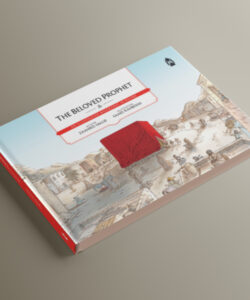
Author of The Beloved Prophet – An Illustrated Biography in Rhyme
Join Allah, the Prophet, and me
Inspiring thoughts and ideas to deepen your connection with Allah and the Prophet (s).
Join me on this journey—enter your email now.

Follow me on Upscrolled, Instagram and X for short but powerful APM excerpts, quotes, and reminders throughout the week.
ABOUT THE NEWSLETTER
The APM Newsletter is a weekly Friday feature, sharing thoughts and ideas to help cultivate the link between Allah, the Prophet and me (meaning YOU).
- APM: Objectified Women, Limitless Generosity, and Organised Power
- APM: The Losers, Building the Base, and Scrambling Genocidaires
- APM: Halal but Un-Islamic, Friday Etiquette, and Encyclopaedias are Dangerous
- APM: A Self-Willed Rebellion, Let’s Prepare Now, and Losing Yourself
- APM: Confederate Temptations, Idol Worship, and Killing Shame
A
Allah
THE LORD OF THE TWO EPOCHS
For many among the previously disenfranchised, and to a larger extent, still disenfranchised, the biggest elephant in the room has been coloniality.
Powerful benefactors, with even more powerful systems and global structures, maintain the status quo long after the formal systems of colonialism, such as conquest, empire, and occupation, cease, as the late John Pilger so cogently argues in his book Freedom Next Time.
From the shanti towns to the suburbs, from the classroom to university lecture theatres, from community centres to the halls of power, from the spaza shop to the mega corporation, the colonial continuum influences from the shadows through coloniality.
In South Africa, the chasms between these dichotomies are deepening due to extreme inequality and a lack of political will to address past injustices and dismantle the colonial machinery. However, what we see is a revolving door in which the colonially minded move between political parties, government, institutions, public affairs, and private business, and colour them to their will rather than for the benefit of the people.
Contrary to colonialism, the Quran teaches that the strong must protect the weak, the rich must support the poor, and the knowledgeable must teach the uneducated, and not deride, subjugate, exploit, and deceive.
We see a beautiful example of this in the story of Thul Qarnayn in Chapter 18, The Cave, of the Quran.
Allah described him as a just king with great power who rightly ruled the earth. Thul Qarnayn literally means “The Two-Horned King” or “The Lord of the Two Epochs.”
Although he was the world’s superpower, he did not arrogate unto himself and felt the need to dominate others. He punished injustice but was humble to acknowledge that the final penalty is with Allah. He created prosperity in the earth and served the weak through the power entrusted to him by Allah. But Thul Qarnayn’s greatest symbol of humility was his lack of appetite to force his will onto others or deem them lesser than.
Thul Qarnayn was wise in this way.
While he was on an expedition travelling the earth, he came upon a primitive people: “Until, when he came to the rising of the sun, he found it rising on a people for whom We had provided no covering protection against the sun. (He left them) as they were: We completely understood what was before him. Then followed he (another) way” [18:90-92].
Yusuf Ali, in his exegesis of these verses, writes: “Power is apt to be intolerant and arrogant, and to interfere with everything that does not accord with its own glorification.”
If today’s megalomaniacs and colonials wish to reform, they must take a lesson from Thul Qurnayn: apply the rule of law justly, and for the benefit of all, not only when it suits them or twist it when it doesn’t; serve the weak, and allow people to live and let live, even if they don’t subscribe to their worldview.
P
The Prophet (s)
TESTING FOR PROPHETIC QUOTIENT
It is 31 July, and we are a few hours away from entering the second month of the second half of the year.
With five months of 2026 remaining, now is a good time to rekindle or boost the intentions we’ve made for the year.
Testing for our prophetic quotient is a good way to get our engines humming again and drive our intentions home.
Here are five prophetic traits to test for:
- The Prophet (s) fasted every week. When was the last time I fasted?
- The Prophet (s) prayed tahajjud, the night prayer, every night for 23 years. When was the last time I prayed tahajjud?
- The Prophet (s) sought forgiveness from God more than 70 times per day. How often do I repent?
- The Prophet (s) was the most generous of people, and he considered smiling and giving a good word acts of charity. Is smiling and uplifting others with kind speech part of my comportment?
- The Prophet (s) was a light and a mercy to the world. Am I a light and a mercy for others in times of darkness and difficulty? Do I invite to good and prohibit evil?
M
AI is Killing Books
The world is becoming more dystopian by the day.
Project Panama was a covert operation to scan and shred all the books in the world.
The mega A.I. corporation responsible for this bibliocide is Anthropic. In May 2026, the San Francisco tech company had a jaw-dropping estimated valuation of $965 billion. A couple of months later, a U.S. federal judge approved a $1.5 billion settlement against the company, the largest copyright infringement payout in history. Still, the penalty failed to make a dent in the A.I. behemoth.
Anthropic was found guilty of stealing text from books without the author’s consent to train its A.I. language models.
A group of authors whose books were victims of this bibliocide had filed a class action lawsuit against Anthropic. Leading the charge was Charles Graeber, the bestselling author of the true-crime book The Good Nurse.
The perverse plan of the creators of all A.I. is to become the gatekeepers of knowledge and market it at a premium.
Artificial Intelligence is not all-knowing. It’s an aggregating digital system built on the biggest heist in history.
Data has been the new oil for a while, but now, with A.I., they’ve got the best tool to mine it.
A.I. must continuously feed. But I fear their creators have developed an even greater appetite, which is why so many data centres are being built to feed these Leviathans. Data centres come at a great cost to the public, who are not only held prisoners by these tools meant to police, influence (marketing to our passions), kill (war tools), and replace us (jobs), but who lose against it in the battle for life’s essentials: water and power. Data centres use obscene amounts of water and power, which not only stress human life but also degrade the environment.
Like Charles Graeber and those authors who stood up against Anthropic and won, we too must fight the fight against A.I.
We can begin the revolution by stocking books, reading books, writing in books, writing books, and holding local government accountable for doing the bidding of these powerful corporations at the expense of the people they are meant to serve.
Join the petition: Pause all new data centre developments in Cape Town
Sources:
- Giant data centres get the first green light from Cape Town tribunal | GroundUp
- New data centres set to swallow 34% of Cape Town’s current electricity supply
- Anthropic lawsuit
Until next week, InshaAllah
Zaahied Sallie
Author of The Beloved Prophet – An Illustrated Biography in Rhyme
Join Allah, the Prophet, and me
Inspiring thoughts and ideas to deepen your connection with Allah and the Prophet (s).
Join me on this journey—enter your email now.

Follow me on Upscrolled, Instagram and X for short but powerful APM excerpts, quotes, and reminders throughout the week.
About The Newsletter
The APM Newsletter is a weekly Friday feature, sharing thoughts and ideas to help cultivate the link between Allah, the Prophet and me (meaning YOU).
Previous Posts
- APM: Objectified Women, Limitless Generosity, and Organised Power
- APM: The Losers, Building the Base, and Scrambling Genocidaires
- APM: Halal but Un-Islamic, Friday Etiquette, and Encyclopaedias are Dangerous
- APM: A Self-Willed Rebellion, Let’s Prepare Now, and Losing Yourself
- APM: Confederate Temptations, Idol Worship, and Killing Shame