A
Allah
PRAYER POWER
Prayers made aeons ago are still weaving their influence on the world today. And none more so than the supplications of God’s Messengers.
Two of the five ulul-azm (arch-prophets), namely Prophets Abraham (as) and Moses (as), teach us how to add weight, depth, and longevity to our petitions.
In surah Taha, verses 33-35, Prophet Moses (as) shows us how to end our prayers to Allah. After seeking from Allah the essentials for his mission (verses 25-32), he indicates that his invocational intention, apart from beseechment, is to cultivate an unstinting system of praise, remembrance, and glorification. Not just once off, but a continuous formulation that will sustain him and maintain his connection with Allah in every moment: tasbih (praise), thikr (remembrance), and tamjid (glorification).
In surah Ibrahim, verses 35-36, Prophet Abraham’s (as) invocation begins by setting the ground for the human being’s most essential need: prayer. So, he seeks safety for Makkah, the sacred sanctuary, the gatherer of all prayers. He then prays for protection for himself and his progeny from false worship.
Prophet Abraham’s prayer in verse 37 contains the most vital ingredients for successful living. A never-ending needs cycle. His petition is in perpetuity. It is not linear, but circular. Thus, illustrating their essential nature in every moment.
Like Moses’ prayer, Abraham’s (verses 35-41) also includes tasbih (praise), thikr (remembrance), and tamjid (glorification). But he adds two additional elements when ending his prayer: shukr (gratitude) and istighfar (repentance).
These two prophetic supplications not only provide the science for prayer but also a system for life.
Prayer Tips:
The things which create a barrier to invocations: neglectfulness in worship, transgressing Divine law, disobedience to God, causing mischief in the earth, and arrogance.
The things which facilitate invocations: pure intention, humility and secrecy in worship, obedience to God, to be Godfearing, hopeful, and penitent.
P
The Prophet (s)
THE MUSLIM’S FORTRESS
Satan’s solicitations only work because of our limited will. The rest, governed by God, is inaccessible to whispers of the devil.
Thus, our responsibility is to safeguard the limited part. We do so by aligning it, like the Prophet (s) did, to God’s Will and making all of it subject to His.
To do so is no easy task. But we can begin with the Prophet’s prayer: “O Allah, I hope for Your mercy. Do not leave me to myself even for the blinking of an eye (i.e. a moment). Correct all of my affairs for me. There is none worthy of worship but You” [Sunan Abu Dawud 3/959].
Arabic dua transliteration: Allāhumma raḥmataka arjū falā takilnī ilā nafsī ṭarfata `ayn, wa aṣliḥ lī sha’nī kullah, lā ilāha illā ant.
M
Provocations
How many small provocations disturb your quietude? If many, it may be a good time to check the quality of your connection with Allah: “Verily in the remembrance of Allah do hearts find rest!” [13:28].
Until next week, InshaAllah
Zaahied Sallie
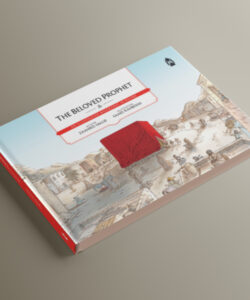
Author of The Beloved Prophet – An Illustrated Biography in Rhyme
Join Allah, the Prophet, and me
Inspiring thoughts and ideas to deepen your connection with Allah and the Prophet (s).
Join me on this journey—enter your email now.

Follow me on Upscrolled, Instagram and X for short but powerful APM excerpts, quotes, and reminders throughout the week.
ABOUT THE NEWSLETTER
The APM Newsletter is a weekly Friday feature, sharing thoughts and ideas to help cultivate the link between Allah, the Prophet and me (meaning YOU).
- APM: Objectified Women, Limitless Generosity, and Organised Power
- APM: The Losers, Building the Base, and Scrambling Genocidaires
- APM: Halal but Un-Islamic, Friday Etiquette, and Encyclopaedias are Dangerous
- APM: A Self-Willed Rebellion, Let’s Prepare Now, and Losing Yourself
- APM: Confederate Temptations, Idol Worship, and Killing Shame
A
Allah
PRAYER POWER
Prayers made aeons ago are still weaving their influence on the world today. And none more so than the supplications of God’s Messengers.
Two of the five ulul-azm (arch-prophets), namely Prophets Abraham (as) and Moses (as), teach us how to add weight, depth, and longevity to our petitions.
In surah Taha, verses 33-35, Prophet Moses (as) shows us how to end our prayers to Allah. After seeking from Allah the essentials for his mission (verses 25-32), he indicates that his invocational intention, apart from beseechment, is to cultivate an unstinting system of praise, remembrance, and glorification. Not just once off, but a continuous formulation that will sustain him and maintain his connection with Allah in every moment: tasbih (praise), thikr (remembrance), and tamjid (glorification).
In surah Ibrahim, verses 35-36, Prophet Abraham’s (as) invocation begins by setting the ground for the human being’s most essential need: prayer. So, he seeks safety for Makkah, the sacred sanctuary, the gatherer of all prayers. He then prays for protection for himself and his progeny from false worship.
Prophet Abraham’s prayer in verse 37 contains the most vital ingredients for successful living. A never-ending needs cycle. His petition is in perpetuity. It is not linear, but circular. Thus, illustrating their essential nature in every moment.
Like Moses’ prayer, Abraham’s (verses 35-41) also includes tasbih (praise), thikr (remembrance), and tamjid (glorification). But he adds two additional elements when ending his prayer: shukr (gratitude) and istighfar (repentance).
These two prophetic supplications not only provide the science for prayer but also a system for life.
Prayer Tips:
The things which create a barrier to invocations: neglectfulness in worship, transgressing Divine law, disobedience to God, causing mischief in the earth, and arrogance.
The things which facilitate invocations: pure intention, humility and secrecy in worship, obedience to God, to be Godfearing, hopeful, and penitent.
P
The Prophet (s)
THE MUSLIM’S FORTRESS
Satan’s solicitations only work because of our limited will. The rest, governed by God, is inaccessible to whispers of the devil.
Thus, our responsibility is to safeguard the limited part. We do so by aligning it, like the Prophet (s) did, to God’s Will and making all of it subject to His.
To do so is no easy task. But we can begin with the Prophet’s prayer: “O Allah, I hope for Your mercy. Do not leave me to myself even for the blinking of an eye (i.e. a moment). Correct all of my affairs for me. There is none worthy of worship but You” [Sunan Abu Dawud 3/959].
Arabic dua transliteration: Allāhumma raḥmataka arjū falā takilnī ilā nafsī ṭarfata `ayn, wa aṣliḥ lī sha’nī kullah, lā ilāha illā ant.
M
Provocations
How many small provocations disturb your quietude? If many, it may be a good time to check the quality of your connection with Allah: “Verily in the remembrance of Allah do hearts find rest!” [13:28].
Until next week, InshaAllah
Zaahied Sallie
Author of The Beloved Prophet – An Illustrated Biography in Rhyme
Join Allah, the Prophet, and me
Inspiring thoughts and ideas to deepen your connection with Allah and the Prophet (s).
Join me on this journey—enter your email now.

Follow me on Upscrolled, Instagram and X for short but powerful APM excerpts, quotes, and reminders throughout the week.
About The Newsletter
The APM Newsletter is a weekly Friday feature, sharing thoughts and ideas to help cultivate the link between Allah, the Prophet and me (meaning YOU).
Previous Posts
- APM: Objectified Women, Limitless Generosity, and Organised Power
- APM: The Losers, Building the Base, and Scrambling Genocidaires
- APM: Halal but Un-Islamic, Friday Etiquette, and Encyclopaedias are Dangerous
- APM: A Self-Willed Rebellion, Let’s Prepare Now, and Losing Yourself
- APM: Confederate Temptations, Idol Worship, and Killing Shame