A
Allah
WRONG ABOUT GOD
Many people’s actions belie their belief in God. How could they believe in God when they do the things they do?
Prophet Abraham (as), Khalil Allah – the friend of God – witnessed this strange phenomenon and asked his people this profoundly logical question: “Then (if you do such and such), what is your idea about the Lord of the Worlds?” [37:86].
This question makes perfect sense to the behavioural scientist who understands that beliefs drive actions. People act according to what they know and believe, not necessarily what is true. So, if religious people sincerely act contrary to God, it must mean their ideas about him are crooked.
Prophet Abraham (as) asked this question of people steeped in idol worship. But we can apply the same logic in many other contexts, too.
When we do, we realise that every man and his dog seem to have an opinion of God, and that much of it is conjecture. It may even sound reasonable, but we must exercise caution when attributing things to the Lord of the Worlds. No one has the right to assume things about the Creator without having clear proofs. If we do, we would have uttered an enormity.
When we view God through the Quranic lens (God’s final and only uncorrupted scripture), we see that unity is His preeminent attribute. God is One. Everything else is separate, though integrated in a move towards unity in parts. Our fragmented world stems from humanity’s rebelliousness against nature, including their own.
Following God’s Indivisible Oneness is His all-encompassing mercy.
God’s mercy precedes His perfect justice, and He charges us to be perfectly just, too. A perfect form of justice is to speak the truth even if it means indicting oneself.
God’s justice is not tribal; it’s impartial.
Thus, when you see a Muslim oppressing a non-Muslim in the name of God, you must ask: What is your idea of the Lord of the Worlds?
Or, when you hear Zionists, white Christian supremacists, or other religious fanatics, claiming superiority over others, you must ask: What is your idea of the Lord of the Worlds?
Or, when you hear a Rabbi claim that a Jewish life is worth more than a non-Jewish life, let alone worth more than one million Palestinians, you must ask: What is your idea of the Lord of the Worlds?
Or, when you see Jewish Settlers, a euphemism for religious thieves, steal Palestinian land, you must ask: What is your idea of the Lord of the Worlds?
Or, when you see synagogues hosting real estate firms selling stolen Palestinian land, you must ask: What is your idea of the Lord of the Worlds?
Or, when you see Christians supporting Zionism, Israeli apartheid, and the expulsion, oppression, and murder of Palestinians in their belief that to do so would accelerate the second coming of Jesus, you must ask: What is your idea of the Lord of the Worlds?
If we do this, we will follow the best tradition of Abraham (as), God’s friend, the monotheist par excellence.
P
The Prophet (s)
HOW TO ADVANCE GRACE
If you want to advance your rizq (sustenance), you must first be grateful for what you have. [14:7]
Exegetes call verse 14:7 a jumlah shartiyyah, a conditional sentence, meaning the outcome depends on fulfilling the condition.
The Prophet (s) lived in perpetual thanksgiving, and through it elevated and sanctified life in the minuscule. His (s) eyes and heart were open to every blessing, regardless of how small, teaching us that we must never consider any blessing, or good or bad deed, insignificant. Allah reminds us: ‘Whoever has done an atom’s weight of good will see it, but whoever has done an atom’s weight of evil will see that’ [99:7-8].
The Prophet’s thanksgiving is beautifully illustrated in the following tradition: ‘When anything came to the Prophet (s) which caused pleasure (or by which he was made glad), he prostrated himself in gratitude to Allah’ [Sunan Abu Dawud].
Falling prostrate in thanks to God builds an inner sanctum of contentment that protects us from lusting for a hoard like Ebenezer Scrooge and gaining no satisfaction.
M
Equaliser
The external forces often seem overwhelming. We gain counterforce through our connection with God.
Until next week, InshaAllah
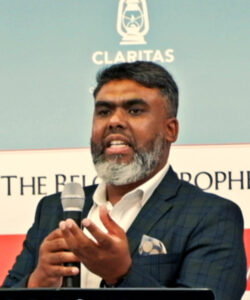
Zaahied Sallie
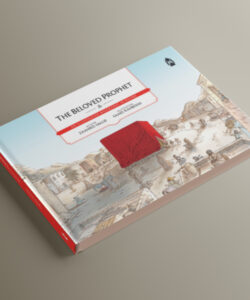
Author of The Beloved Prophet – An Illustrated Biography in Rhyme
Join Allah, the Prophet, and me
Inspiring thoughts and ideas to deepen your connection with Allah and the Prophet (s).
Join me on this journey—enter your email now.

Follow me on Upscrolled, Instagram and X for short but powerful APM excerpts, quotes, and reminders throughout the week.
ABOUT THE NEWSLETTER
The APM Newsletter is a weekly Friday feature, sharing thoughts and ideas to help cultivate the link between Allah, the Prophet and me (meaning YOU).
- APM: Objectified Women, Limitless Generosity, and Organised Power
- APM: The Losers, Building the Base, and Scrambling Genocidaires
- APM: Halal but Un-Islamic, Friday Etiquette, and Encyclopaedias are Dangerous
- APM: A Self-Willed Rebellion, Let’s Prepare Now, and Losing Yourself
- APM: Confederate Temptations, Idol Worship, and Killing Shame
A
Allah
WRONG ABOUT GOD
Many people’s actions belie their belief in God. How could they believe in God when they do the things they do?
Prophet Abraham (as), Khalil Allah – the friend of God – witnessed this strange phenomenon and asked his people this profoundly logical question: “Then (if you do such and such), what is your idea about the Lord of the Worlds?” [37:86].
This question makes perfect sense to the behavioural scientist who understands that beliefs drive actions. People act according to what they know and believe, not necessarily what is true. So, if religious people sincerely act contrary to God, it must mean their ideas about him are crooked.
Prophet Abraham (as) asked this question of people steeped in idol worship. But we can apply the same logic in many other contexts, too.
When we do, we realise that every man and his dog seem to have an opinion of God, and that much of it is conjecture. It may even sound reasonable, but we must exercise caution when attributing things to the Lord of the Worlds. No one has the right to assume things about the Creator without having clear proofs. If we do, we would have uttered an enormity.
When we view God through the Quranic lens (God’s final and only uncorrupted scripture), we see that unity is His preeminent attribute. God is One. Everything else is separate, though integrated in a move towards unity in parts. Our fragmented world stems from humanity’s rebelliousness against nature, including their own.
Following God’s Indivisible Oneness is His all-encompassing mercy.
God’s mercy precedes His perfect justice, and He charges us to be perfectly just, too. A perfect form of justice is to speak the truth even if it means indicting oneself.
God’s justice is not tribal; it’s impartial.
Thus, when you see a Muslim oppressing a non-Muslim in the name of God, you must ask: What is your idea of the Lord of the Worlds?
Or, when you hear Zionists, white Christian supremacists, or other religious fanatics, claiming superiority over others, you must ask: What is your idea of the Lord of the Worlds?
Or, when you hear a Rabbi claim that a Jewish life is worth more than a non-Jewish life, let alone worth more than one million Palestinians, you must ask: What is your idea of the Lord of the Worlds?
Or, when you see Jewish Settlers, a euphemism for religious thieves, steal Palestinian land, you must ask: What is your idea of the Lord of the Worlds?
Or, when you see synagogues hosting real estate firms selling stolen Palestinian land, you must ask: What is your idea of the Lord of the Worlds?
Or, when you see Christians supporting Zionism, Israeli apartheid, and the expulsion, oppression, and murder of Palestinians in their belief that to do so would accelerate the second coming of Jesus, you must ask: What is your idea of the Lord of the Worlds?
If we do this, we will follow the best tradition of Abraham (as), God’s friend, the monotheist par excellence.
P
The Prophet (s)
HOW TO ADVANCE GRACE
If you want to advance your rizq (sustenance), you must first be grateful for what you have. [14:7]
Exegetes call verse 14:7 a jumlah shartiyyah, a conditional sentence, meaning the outcome depends on fulfilling the condition.
The Prophet (s) lived in perpetual thanksgiving, and through it elevated and sanctified life in the minuscule. His (s) eyes and heart were open to every blessing, regardless of how small, teaching us that we must never consider any blessing, or good or bad deed, insignificant. Allah reminds us: ‘Whoever has done an atom’s weight of good will see it, but whoever has done an atom’s weight of evil will see that’ [99:7-8].
The Prophet’s thanksgiving is beautifully illustrated in the following tradition: ‘When anything came to the Prophet (s) which caused pleasure (or by which he was made glad), he prostrated himself in gratitude to Allah’ [Sunan Abu Dawud].
Falling prostrate in thanks to God builds an inner sanctum of contentment that protects us from lusting for a hoard like Ebenezer Scrooge and gaining no satisfaction.
M
Equaliser
The external forces often seem overwhelming. We gain counterforce through our connection with God.
Until next week, InshaAllah
Zaahied Sallie
Author of The Beloved Prophet – An Illustrated Biography in Rhyme
Join Allah, the Prophet, and me
Inspiring thoughts and ideas to deepen your connection with Allah and the Prophet (s).
Join me on this journey—enter your email now.

Follow me on Upscrolled, Instagram and X for short but powerful APM excerpts, quotes, and reminders throughout the week.
About The Newsletter
The APM Newsletter is a weekly Friday feature, sharing thoughts and ideas to help cultivate the link between Allah, the Prophet and me (meaning YOU).
Previous Posts
- APM: Objectified Women, Limitless Generosity, and Organised Power
- APM: The Losers, Building the Base, and Scrambling Genocidaires
- APM: Halal but Un-Islamic, Friday Etiquette, and Encyclopaedias are Dangerous
- APM: A Self-Willed Rebellion, Let’s Prepare Now, and Losing Yourself
- APM: Confederate Temptations, Idol Worship, and Killing Shame