A
Allah
THE DAWN CLUB
Robin Sharma, a bestselling author and one of the foremost leadership guides in the West, is a committed advocate for rising at 5 am. He even wrote a book, The 5 am Club, which is about establishing a foundational morning routine.
“5 am is the time of least distraction, highest human glory, and least distraction,” says Sharma.
Sharma’s quote may sound axiomatic, but it’s not. And because most of his work is solid, one may assume that all of it is, including his faulty quote.
Still, it is every Muslim’s responsibility to verify claims: “Say, ‘Produce your proof, if you should be truthful’” [2:111].
A simple method to verify his assertion is to ask: why not 4 am, 04:30 or even 6 am? What makes 5 am the exalted hour? What distinguishes it from the rest of the clock?
We soon realise that what happens at 5 am cosmologically changes every day. And that 5 am today would cosmologically resemble some other time two months from now. Thus, it is not the hour that’s distinct but the daily natural phenomena that occur at certain times of the day and their impact on us physically, psychologically, and emotionally.
My intention is not to criticise Sharma, but to caution us from adopting ideas that are inferior to the Islamic or natural model.
Animals instinctively synchronise their rhythms with the flight of the sun. And since humans are rational animals, it begs the question: why don’t we follow the circadian rhythms and float with the sun, too?
Luckily, the five Muslim prayers (dawn, noon, mid-day, dusk, and night) are tied to the sun’s cycle and align with natural circadian and ultradian rhythms.
For 1400 years, Islam has cultivated the Dawn Club. Now this is no ordinary club. God established it on the Night of Mi’raj when he raised the Prophet (s) to the highest heaven and gave him the five daily prayers, beginning with the dawn prayer. Dawn is so sacred and influential to the human and cosmic order that God takes an oath by it. [89:1]
To become a successful member of the Dawn Club, we must understand dusk and its ramifications: “And He it is Who makes the Night as a Robe for you, and Sleep as Repose, and makes the Day (as it were) a Resurrection” [25:47].
Why dusk? You might ask. Dawn is connected to dusk. How we wind down at night influences our mornings or ‘dawnings’ and the quality of our resurrection.
Establishing a successful morning routine begins with the first prayer of the day: Dusk.
Yes, dusk, or the Maghrib prayer, is the first prayer of the day.
The Islamic day begins after sunset. The Islamic month begins after sunset. The first tarawih prayers for Ramadan begin after sunset. The takbir (special glorification of God) for Eid begins after sunset.
We first pray tarawih (the special Ramadan prayers) the night before we fast the next day. We sonorously recite the takbir, animating ourselves and our spaces during the evening before inhabiting the day of Eid.
The Divine order of these rituals supports and activates our spiritual, mental, and emotional preparation for the next day.
How we settle in after dusk will determine how we rise at dawn.
Circadian and ultradian rhythms are also bound to the seasons. The colder months contract our days and expand our nights, allowing darkness to enrobe us for longer before the dawn. This semi-hibernation is a form of Allah’s mercy. The extended dark cocoon serves as an annual respite to rejuvenate, revitalise, recharge and renew the body and mind. It is part of the body’s natural cycle to which we should surrender if we wish to remain healthy.
Similarly, we must adapt to the opposite during the warmer months. And just like an excellent dusk routine leads to a super dawn, the calibre of our adaptation is determined by the quality of our hibernation.
So settle in intentionally, whether for the night or winter season, and let the dawn powerfully drive your daily or summer routine.
P
The Prophet (s)
DIVINE REFLECTION
Humans, just like the moon, do not shine from their own light.
Only when we accept Divine Light can we become vessels that cast light into the world.
And just as the moon best mirrors the light of the sun for our sunless nights, so too did the Prophet Muhammad (s) best reflect the prototypal light for our spiritual plight.
It is no wonder then, that when Al-Bara’ was asked, “Was the face of the Prophet (as bright) as a sword?” He said, “No, but (as bright) as a moon.” [Sahih al-Bukhari 3552]
M
Rainbow Nation
To live up to South Africa’s ‘Rainbow Nation’ ideals, we must get to know each other. Not necessarily marrow deep, but deep enough to prove to the other person that I’m invested.
And a good way to begin is by asking someone their name.
Until next week, InshaAllah
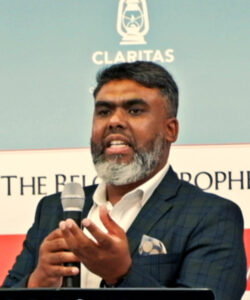
Zaahied Sallie
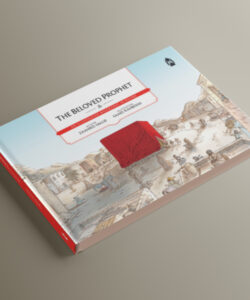
Author of The Beloved Prophet – An Illustrated Biography in Rhyme
Join Allah, the Prophet, and me
Inspiring thoughts and ideas to deepen your connection with Allah and the Prophet (s).
Join me on this journey—enter your email now.

Follow me on Upscrolled, Instagram and X for short but powerful APM excerpts, quotes, and reminders throughout the week.
ABOUT THE NEWSLETTER
The APM Newsletter is a weekly Friday feature, sharing thoughts and ideas to help cultivate the link between Allah, the Prophet and me (meaning YOU).
- APM: Objectified Women, Limitless Generosity, and Organised Power
- APM: The Losers, Building the Base, and Scrambling Genocidaires
- APM: Halal but Un-Islamic, Friday Etiquette, and Encyclopaedias are Dangerous
- APM: A Self-Willed Rebellion, Let’s Prepare Now, and Losing Yourself
- APM: Confederate Temptations, Idol Worship, and Killing Shame
A
Allah
THE DAWN CLUB
Robin Sharma, a bestselling author and one of the foremost leadership guides in the West, is a committed advocate for rising at 5 am. He even wrote a book, The 5 am Club, which is about establishing a foundational morning routine.
“5 am is the time of least distraction, highest human glory, and least distraction,” says Sharma.
Sharma’s quote may sound axiomatic, but it’s not. And because most of his work is solid, one may assume that all of it is, including his faulty quote.
Still, it is every Muslim’s responsibility to verify claims: “Say, ‘Produce your proof, if you should be truthful’” [2:111].
A simple method to verify his assertion is to ask: why not 4 am, 04:30 or even 6 am? What makes 5 am the exalted hour? What distinguishes it from the rest of the clock?
We soon realise that what happens at 5 am cosmologically changes every day. And that 5 am today would cosmologically resemble some other time two months from now. Thus, it is not the hour that’s distinct but the daily natural phenomena that occur at certain times of the day and their impact on us physically, psychologically, and emotionally.
My intention is not to criticise Sharma, but to caution us from adopting ideas that are inferior to the Islamic or natural model.
Animals instinctively synchronise their rhythms with the flight of the sun. And since humans are rational animals, it begs the question: why don’t we follow the circadian rhythms and float with the sun, too?
Luckily, the five Muslim prayers (dawn, noon, mid-day, dusk, and night) are tied to the sun’s cycle and align with natural circadian and ultradian rhythms.
For 1400 years, Islam has cultivated the Dawn Club. Now this is no ordinary club. God established it on the Night of Mi’raj when he raised the Prophet (s) to the highest heaven and gave him the five daily prayers, beginning with the dawn prayer. Dawn is so sacred and influential to the human and cosmic order that God takes an oath by it. [89:1]
To become a successful member of the Dawn Club, we must understand dusk and its ramifications: “And He it is Who makes the Night as a Robe for you, and Sleep as Repose, and makes the Day (as it were) a Resurrection” [25:47].
Why dusk? You might ask. Dawn is connected to dusk. How we wind down at night influences our mornings or ‘dawnings’ and the quality of our resurrection.
Establishing a successful morning routine begins with the first prayer of the day: Dusk.
Yes, dusk, or the Maghrib prayer, is the first prayer of the day.
The Islamic day begins after sunset. The Islamic month begins after sunset. The first tarawih prayers for Ramadan begin after sunset. The takbir (special glorification of God) for Eid begins after sunset.
We first pray tarawih (the special Ramadan prayers) the night before we fast the next day. We sonorously recite the takbir, animating ourselves and our spaces during the evening before inhabiting the day of Eid.
The Divine order of these rituals supports and activates our spiritual, mental, and emotional preparation for the next day.
How we settle in after dusk will determine how we rise at dawn.
Circadian and ultradian rhythms are also bound to the seasons. The colder months contract our days and expand our nights, allowing darkness to enrobe us for longer before the dawn. This semi-hibernation is a form of Allah’s mercy. The extended dark cocoon serves as an annual respite to rejuvenate, revitalise, recharge and renew the body and mind. It is part of the body’s natural cycle to which we should surrender if we wish to remain healthy.
Similarly, we must adapt to the opposite during the warmer months. And just like an excellent dusk routine leads to a super dawn, the calibre of our adaptation is determined by the quality of our hibernation.
So settle in intentionally, whether for the night or winter season, and let the dawn powerfully drive your daily or summer routine.
P
The Prophet (s)
DIVINE REFLECTION
Humans, just like the moon, do not shine from their own light.
Only when we accept Divine Light can we become vessels that cast light into the world.
And just as the moon best mirrors the light of the sun for our sunless nights, so too did the Prophet Muhammad (s) best reflect the prototypal light for our spiritual plight.
It is no wonder then, that when Al-Bara’ was asked, “Was the face of the Prophet (as bright) as a sword?” He said, “No, but (as bright) as a moon.” [Sahih al-Bukhari 3552]
M
Rainbow Nation
To live up to South Africa’s ‘Rainbow Nation’ ideals, we must get to know each other. Not necessarily marrow deep, but deep enough to prove to the other person that I’m invested.
And a good way to begin is by asking someone their name.
Until next week, InshaAllah
Zaahied Sallie
Author of The Beloved Prophet – An Illustrated Biography in Rhyme
Join Allah, the Prophet, and me
Inspiring thoughts and ideas to deepen your connection with Allah and the Prophet (s).
Join me on this journey—enter your email now.

Follow me on Upscrolled, Instagram and X for short but powerful APM excerpts, quotes, and reminders throughout the week.
About The Newsletter
The APM Newsletter is a weekly Friday feature, sharing thoughts and ideas to help cultivate the link between Allah, the Prophet and me (meaning YOU).
Previous Posts
- APM: Objectified Women, Limitless Generosity, and Organised Power
- APM: The Losers, Building the Base, and Scrambling Genocidaires
- APM: Halal but Un-Islamic, Friday Etiquette, and Encyclopaedias are Dangerous
- APM: A Self-Willed Rebellion, Let’s Prepare Now, and Losing Yourself
- APM: Confederate Temptations, Idol Worship, and Killing Shame